DOI:
10.37988/1811-153X_2025_4_88Residual monomer release dynamics in heat- and cold-cured dental polymethyl methacrylates: a pilot study
Downloads
Abstract
Residual methyl methacrylate (MMA) in polymethyl methacrylate (PMMA) is a risk factor in removable prostheses due to its potential cytotoxicity. Objective. To assess the release dynamics of MMA from domestically produced heat- and cold-cured PMMA samples during the first 10 days post-polymerization.Materials and methods.
Standardized specimens (10×10×4 mm) were fabricated from heat-cured PMMA and cold-cured PMMA. Samples were stored in deionized water at 37°C, and the MMA concentration in the eluates was measured on days 1, 3, 6, and 10 by micellar electrokinetic capillary chromatography.
Results.
In the heat-cured group, the mean MMA concentration ranged from 0.237 to 0.641 µg/mL (p=0.480), while in the cold-cured group it ranged from 0.796 to 5.443 µg/mL (p=0.109). No statistically significant changes in MMA levels were observed over the monitoring period (p> 0.05).
Conclusions.
Under the conditions tested—storage in deionized water for up to 10 days—the storage duration does not affect the residual monomer content in PMMA. These findings are important for developing PMMA post-curing protocols prior to clinical application.
Key words:
polymethyl methacrylate, methyl methacrylate, denture bases, electrophoresis, capillary, time factorsFor Citation
Introduction
Polymethyl methacrylate (PMMA) remains one of the most sought-after materials in dental practice, particularly for the fabrication of complete removable dental prosthesis (CRDP) bases. This popularity is primarily explained by the socioeconomic accessibility of devices based on it [1, 2]. With increasing life expectancy in Russia, a rise in the proportion of the elderly population is expected, which will, in turn, lead to an increased demand for removable dental prosthetics [3, 4].
One of the significant problems associated with the use of PMMA remains the presence of residual monomer — methylmethacrylate (MMA) — which exhibits cytotoxic and allergenic effects. Its presence can cause complications, both local and systemic [5–8].
When assessing factors influencing potential complications, the specific characteristics of the oral environment should be considered. Thus, according to a study by O.I. Manin (2021), a decrease in salivary pH is observed with age [9]. These changes may play an unfavorable role, given the results of a study by H.N. Al-Otaibi et al. (2021), which showed that residual monomer release is more intense in an acidic environment compared to neutral and alkaline conditions [10].
Furthermore, the manufacturing technology of products based on PMMA affects both the residual monomer content (in CAD/CAM materials, MMA is not detected, whereas in compression-molded PMMA its concentration reaches 4.74 μg/mL) [11, 12] and the physico-mechanical properties of the finished dentures (flexural strength 62.57–103.33 MPa; Vickers microhardness 10.61–22.86 VHN depending on the fabrication method) [13], as well as the microbiological characteristics of the material, where the influence of residual monomer is considered one of the possible factors involved in microbial adhesion [14]. It should be noted that certain technological features of the material are formed already at the polymer synthesis stage (suspension polymerization conditions, type of dispersant, stirring intensity), which may subsequently affect its performance characteristics [15].
Nevertheless, the literature notes contradictions regarding the degree of technological factors influence. As shown by J. Vuksic et al. (2024), differences in residual monomer levels can be observed even between materials produced using the same technology (e.g., CAD/CAM), indicating the decisive influence of specific manufacturers' characteristics [13]. In turn, N. Polychronakis et al. [16], studying different cooling regimes for heat-cured PMMA, demonstrated variability in residual monomer content even within a single material. These data underscore the need for further improvement of technologies and product quality control.
Existing studies primarily focus on both short-term (up to 72 hours) elution of residual monomer [17] and long-term periods (up to 60 days) [18]. However, data on the release dynamics in the interval between several days and long-term storage are limited. Moreover, most studies have been conducted on foreign materials, while information on Russian materials is extremely scarce [19, 20]. This complicates their direct extrapolation to domestic analogs, since the composition, manufacturing technology, and characteristics of polymers may differ significantly depending on the manufacturer. In this regard, the study of domestic samples appears necessary to obtain accurate data.
Understanding the dynamics of residual monomer release is of interest both for substantiating clinical recommendations for the removable dentures care and for ensuring the reliability of experimental data, where possible changes in material properties during storage may affect the analysis results.
Aim of the study — to identify the characteristics of residual monomer MMA release dynamics from heat- and cold-cured PMMA polymer samples during the first 10 days after their fabrication.
Materials and methods
1. Preparation and storage of samples
PMMA materials “Belakril-M HC” for heat curing (HC) and “Belakril-M CC” for cold curing (CC; VladMiVa, Russia) were used in the study. For each type of PMMA one workpiece measuring 50×50×4 mm was fabricated in a metal mold according to the manufacturer's recommendations. 20 samples measuring 10×10×4 mm were cut from each workpiece and packaged in individual sealed bags. For analysis at each of the four control points (days 1, 3, 6, and 10), 3 samples of each type were randomly selected (total of 12 samples per group); the remaining samples were stored as spares at 22–24°C in a dark place.
2. Monomer Extraction
Before extraction each sample was weighed on an analytical balance with an accuracy of 0.1 mg and placed into a glass vial with a volume of at least 10 mL containing 3 mL of deionized water. The vials were sealed tightly and incubated at 37°C for 24 hours. After extraction completion, the extracts were analyzed without additional processing.
3. Analysis methodology
Quantitative determination of residual MMA in aqueous extracts was performed using micellar electrokinetic chromatography (MEKC) according to a previously published method [21]. A Kapel-105M system (Lumex, Russia) equipped with a UV detector (λ=215 nm) and a fused silica capillary (75 μm inner diameter, 60/50 cm total/effective length) was used for the analysis. The background electrolyte contained 80 mmol/L sodium dodecyl sulfate and 20 mmol/L sodium tetraborate. The applied voltage was +25 kV; samples were introduced hydrodynamically at 30 mbar for 5 s; the capillary temperature was maintained at 25°C. The capillary was rinsed according to a standard protocol: H2O → 1 M HCl → H2O → 70% 0.1 M NaOH + 30% ethanol → H2O (each step for 5 min at a pressure of 1000 mbar).
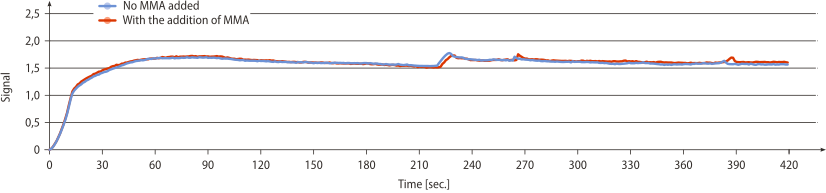
To confirm the specificity of the MMA peak in the extracts, a qualitative spike test was performed: an MMA solution at approximately the same concentration as determined was added to each extract, and the increase in peak area was recorded without any change in migration time or the additional peaks appearance.
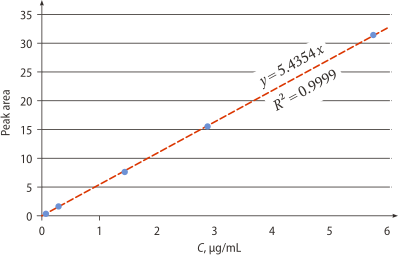
Using Elforan software (Lumex, Russia), a calibration curve for the MMA peak area versus its concentration in an aqueous solution was obtained in the range from 0.1 to 5.7 μg/mL.
4. Statistical analysis
The null hypothesis (H0) was formulated as follows: the concentration of residual monomer MMA in PMMA samples is independent of storage time. To test H0, the normality of the distribution was assessed (Anderson–Darling test), and the nonparametric Kruskal–Wallis test was applied to compare median values between time points. The relationship “storage time — MMA concentration” was evaluated using one-way regression analysis with testing for homoscedasticity (Lack-of-Fit test) and autocorrelation of residuals (Durbin–Watson criterion). The statistical significance level was set at p<0.05.
Results
1. Method validation
The obtained calibration curve demonstrated high linearity and is described by the equation S=5.4354C, with a coefficient of determination R²=0.9999 (Fig. 1).
To assess accuracy and reproducibility, each extract was analyzed in triplicate. A total of 12 MMA concentration values were obtained for the heat-cured series; however, one anomalously high value (0.661 μg/mL) was considered an outlier and excluded from the calculation of descriptive statistical indicators. The final statistical parameters for the series are presented in Table 1.
| Material | Mean value | 95% CI | δ [%] |
|---|---|---|---|
| HC (n=11) | 0.265±0.003 | [0.263; 0.267] | 1.1 |
| CC (n=15) | 3.398±1.955 | [2.316; 4.481] | 57.5 |
2. Confirmation of specificity
To verify that the recorded peak in the electropherograms corresponds exclusively to MMA and not to by-products, an MMA standard was added to the aqueous PMMA extracts at a concentration close to the determined value, and the analysis was repeated. Figure 2 shows fragments of the electropherograms before and after the addition: the increase in the area of the main peak without the appearance of additional signals or a change in migration time confirms the specificity of the analytical signal for MMA under the employed MEKC conditions.
 A
A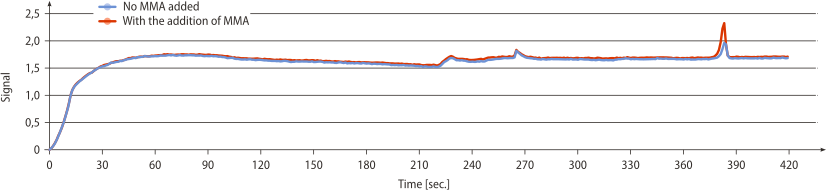 B
B3. Dynamics of MMA concentration over time
The concentrations of MMA in the extracts were determined on days 1, 3, 6, and 10 of storage. During the analysis of cold-curing (CC) samples on day 6, an increased scatter of MMA concentration values was detected (δ=11.4%). Consequently, on day 10, the number of samples studied in the CC group was increased from three to six (Table 2).
For correct comparison of concentrations, all obtained values were recalculated to a standard sample mass of 500 mg.
| Day | n | Average sample mass [mg] | Concentration recalculated to 500 mg [μg/mL] | 95% CI | δ [%] |
|---|---|---|---|---|---|
| HC | |||||
| 1 | 3 | 462±21 | 0.237±0.010 | 0.225–0.249 | 4.2 |
| 3 | 3 | 454±14 | 0.265±0.012 | 0.248–0.282 | 4.5 |
| 6 | 3 | 450±11 | 0.269±0.011 | 0.252–0.286 | 4.1 |
| 10 | 3 | 467±18 | 0.641±0.020 | 0.597–0.685 | 3.1 |
| CC | |||||
| 1 | 3 | 392±25 | 0.796±0.041 | 0.679–0.913 | 5.2 |
| 3 | 3 | 428±12 | 2.296±0.125 | 2.031–2.561 | 5.4 |
| 6 | 3 | 373±17 | 1.851±0.105 | 1.593–2.109 | 11.4 |
| 10 | 6 | 410±30 | 5.443±1.234 | 3.699–7.187 | 22.7 |
Despite the variability increase in the CC group (δ up to 22.7% on day 10), the mean MMA concentrations did not demonstrate a statistically significant decrease over the 10-day storage period in either the HC group (p=0.480) or the CC group (p=0.109).
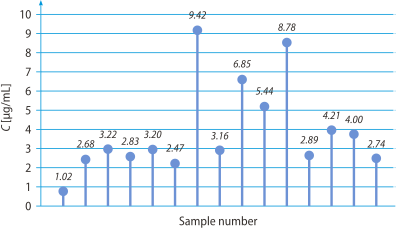
For a clear division into groups based on the level of MMA release in the cold-cured (CC) series, a histogram of concentration distribution was constructed (Fig. 3). Based on the natural “clustering” of data points, three value ranges were identified: low — 2.47–2.89 μg/mL (δ=5.3%), medium — 3.16–3.22 μg/mL (δ=0.8%), and high — 4.00–5.76 μg/mL (δ=2.6%).
Thus, despite the pronounced multimodality of the overall distribution, the variability of concentrations within each cluster remains moderate and independent of storage time. Samples with values significantly outside these intervals did not form their own clusters and are considered rare deviations. This division reflects the internal heterogeneity of the CC series in terms of the amount released monomer, independent of storage time.
4. Statistical data analysis
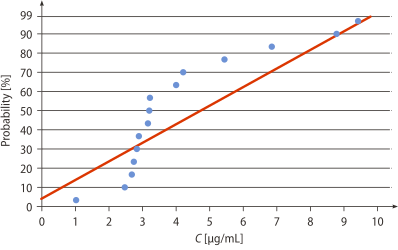
For both series, the Anderson–Darling (AD) test demonstrated that the distribution of measured MMA concentration values deviates significantly from normal: for heat-cured, with n=12, AD=3.792 (p<0.005); for cold-cured, AD=1.118 (n=15, p<0.005). Since the raw data do not satisfy the assumption of normality, the nonparametric Kruskal–Wallis test was used to compare median concentrations between time points (Fig. 4).
 A
A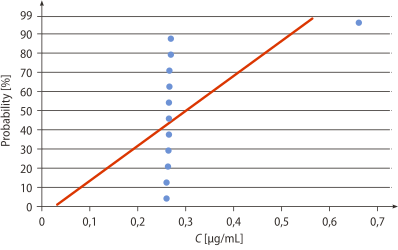 B
BAfter checking the normality of distribution, the median MMA concentrations on days 1, 3, 6, and 10 were compared for each series using the Kruskal-Wallis test. In the hear-cured series, H=2.47 (df=3, p=0.480); in the cold-cured series, H=6.06 (df=3, p=0.109). In both cases, p>0.05, indicating no significant differences between the time points.
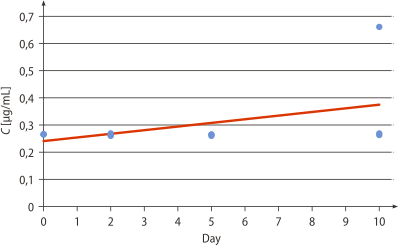
Since the Kruskal–Wallis test did not reveal significant changes in medians over time, regression analysis was applied to quantitatively assess a possible trend. Linear models of MMA concentration on storage time dependence for heat and cold curing were similar in form and demonstrated low explanatory power. The linear models for both series have a similar structure and limited explanatory capacity (Fig. 5).
 A
A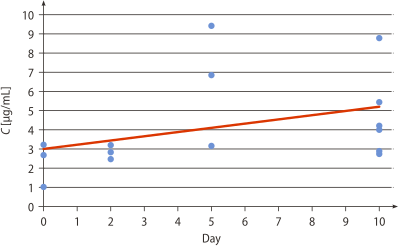 B
BThe contribution of the “day” factor was statistically insignificant in both cases (Table 3). No systematic curvature of residuals or autocorrelation was detected. Observations with extreme standardized residuals were sample No. 10 (standardized residual 3.16) in the HC series and sample No. 7 (standardized residual 2.39) in the CC series.
| Material | Significance of regression | Systematic curvature | Autocorrelation of residuals | ||
|---|---|---|---|---|---|
| F | p | F | p | ||
| HC | 2.69 | 0.132 | 0.36 | 0.708 | 2.363 |
| CC | 2.29 | 0.154 | 2.44 | 0.133 | 2.211 |
Thus, despite the presence of a slight positive slope in both linear models, the time coefficient did not reach statistical significance in either the HC series or the CC series, and the variable “storage day” itself explains only a small part of the variance in MMA concentrations.
These results indicate that storage time within the interval of up to 10 days is not a key factor determining the residual monomer concentration in samples of either heat or cold curing.
Discussion
The study hypothesis assumed that during the first ten days after PMMA samples polymerization, the concentration of leached residual MMA would change over time. To test this hypothesis, the nonparametric Kruskal–Wallis test was applied, which showed no statistically significant differences in median values on days 1, 3, 6, and 10 (p=0.48 for hot curing and p=0.11 for cold curing). Regression analysis confirmed that the slope of the trend line for concentration over time did not differ from zero (p>0.1), with significant deviation of the data from a normal distribution (according to the Anderson–Darling test, p<0.005). Consequently, the hypothesis regarding the presence of pronounced temporal dynamics of MMA leaching within the considered interval was not confirmed.
In PMMA, the degree of conversion of monomeric double bonds during heat curing (92–93%) is accompanied by a significantly lower volume of residual monomer compared to cold curing, where conversion is only 85–88%. S.Y. Lee et al. (2002) confirmed this inverse relationship using high-performance liquid chromatography: cold-cured samples leach up to 317 ppm of monomer over a week, whereas for heat-cured, this value drops to 5 ppm, corresponding to an 80% reduction [22, 23]. These data explain why the “rapid” phase of leaching occurs immediately after polymerization and sets the amplitude of the initial peak.
The leaching “plateau” identified in our study (in the interval from 1 to 10 days) indicates that the bulk of the available monomer is released within the first 24 hours, and its subsequent release into the medium occurs so slowly that it remains practically imperceptible within the chosen time frame. K. Sarna-Boś et al. (2021) showed that materials with larger pores leach low-molecular-weight fractions faster than samples with a microporous matrix [24]. In our experiments, by 24 hours, the monomer concentration in the extract had already reached a stable level, after which no changes were detected in the interval from day 1 to day 10. This leaching plateau indicates that the bulk of the available monomer is released within the first 24 hours, and its subsequent release into the medium occurs so slowly that it remains practically imperceptible within the chosen time frame.
Several key studies have shown that the main release of MMA occurs within the first hours to day after polymerization, followed by a plateau-shaped profile in the subsequent period. For instance, R.D. Singh et al. (2013) in an in vivo study found a maximum MMA concentration in patients' saliva of 0.30±0.09 μg/ml after 24 hours, while at 1 hour and on day 3, it was recorded at levels of 0.04 and 0.05 μg/ml, respectively [25]. In our study, where MMA concentration was determined by the MEKC method, the first observation point (24 h) yielded a mean value of 0.27±0.05 μg/ml; thereafter, on days 3, 6, and 10, changes did not exceed the statistical margin of error (Kruskal–Wallis test, p>0.05).
In laboratory models using artificial saliva, Z. Sahin et al. (2025) did not detect any monomer at 24, 72, and 120 hours, indicating complete leaching of free molecules by the end of the first day [7]. Similarly, E. Berghaus et al. (2023), using deionized water, recorded MMA levels below the limit of detection over a period of 120 days, whereas during extraction in ethanol, the peak of leaching occurred in the first few hours, after which the concentration remained unchanged [26].
A study by M.L. Engler et al. (2019) demonstrated the stability of MMA concentration in PMMA samples fabricated by heat polymerization when stored in water for 1 to 60 days [18]. Finally, G. Smidt et al. (2024), in a laboratory comparison of CAD/CAM samples, 3D-printed, and conventionally cured specimens during extraction in ethanol, showed the absence of residual monomer in milled materials after 30 days and a plateau-shaped profile in traditional samples by 48 hours after polymerization [27].
Thus, regardless of the fabrication method (heat-cured/cold-cured polymerization, CAD/CAM, 3D printing) and the composition of the extraction medium (deionized water, artificial saliva, ethanol), the primary release of residual MMA occurs within the first 24 hours after polymerization, and the period from 1 to 10 days is characterized by relative stability of concentration.
Given that the key period of MMA release occurs within the first 24 hours, from a clinical perspective, special attention should be paid to cold polymerization: during clinical rebasing, there is no time buffer in the form of a 24-hour holding period, and the peak release of MMA coincides with the start of the denture's use. Since it is not possible to implement a technical hold for the denture (for natural stabilization of MMA levels) within a single appointment, methods for rapidly reducing MMA concentration emerge as a significant practical concern. Specifically, the application of gas-dynamic treatment represents a promising avenue, within which a reduction of MMA by 80–90% within 5–10 minutes using supercritical carbon dioxide has been demonstrated. Nevertheless, we were unable to find any clinically verified protocols for this or similar methods; therefore, the technique of extracting residual monomer with carbon dioxide requires further investigation [28].
When interpreting our results, it is important to consider that the leaching model was based on deionized water, which simplifies the picture to pure diffusion but does not replicate the interaction of MMA with salivary proteins and enzymes or the influence of pH fluctuations. The observations are limited to the first ten days after polymerization — the “slow” phase of leaching, during which the monomer is released from deeper layers of the matrix, may manifest later. The small sample size and the use of only two domestic PMMA brands reduce the statistical power and do not allow us to assert that similar kinetics apply to other manufacturers. The specimen geometry (10×10×4 mm) was chosen to standardize the experiment; however, in actual dentures, the shape and thickness vary, which affects the surface area and the rate of monomer diffusion. We also did not model masticatory load and the constant renewal of saliva, which in a clinical setting contribute to additional monomer elution, nor did we account for potential technological variations in polymerization parameters (temperature, pressure, time) that can alter the degree of conversion and pore structure.
Conclusion
This study demonstrated that in the period up to 10 days after polymerization, the concentration of residual methyl methacrylate monomer in aqueous extracts of heat-cured and cold-cured PMMA samples remains stable and does not exhibit statistically significant changes. That allows to characterize this period as a post-conversion plateau phase. The observed stability of concentrations under storage conditions in deionized water indicates a limited influence of time on monomer release during the initial phase after polymerization.
References
- Arutyunov S.D., Grachev D.I., Martynenko A.V. The medical social work with individuals of elderly and senile age with total loss of teeth. Problems of Social Hygiene, Public Health and History of Medicine. 2021; 3: 509—513 (In Russian). eLIBRARY ID: 46230510
- Grachev D.I., Martynenko A.V., Perekhodov S.N., Kostyrin E.V., Mustafaev M.Sh., Akhmedov K.G., Deshev A.V., Rozanov D.G., Korotkova N.L., Kerasov S.N., Arutyunov S.A. New assessment model of financing treatment of patients with complete tooth loss. Emerging Science Journal. 2024; 5: 1898—1916. DOI: 10.28991/ESJ-2024-08-05-014
- Goroshko N.V., Emelyanova E.K., Patsala S.V. Healthy life expectancy in Russia in the context of the global aging problem. PNRPU Sociology and Economics Bulletin. 2021; 4: 78—99 (In Russian). eLIBRARY ID: 47505747
- Frolova E.V., Turusheva A.V., Trezubov V.N., Rozov R.A., Kabanov M.Y., Gvetadze R.S., Arutyunov S.D. Healthy aging and oral health. Russian Family Doctor. 2023; 1: 5—14 (In Russian). eLIBRARY ID: 51286749
- Chaves C.A., Machado A.L., Vergani C.E., de Souza R.F., Giampaolo E.T. Cytotoxicity of denture base and hard chairside reline materials: a systematic review. J Prosthet Dent. 2012; 107 (2): 114—27. PMID: 22304746
- Gosavi S.S., Gosavi S.Y., Alla R.K. Local and systemic effects of unpolymerised monomers. Dent Res J (Isfahan). 2010; 7 (2): 82—7. PMID: 22013462
- Sahin Z., Ozkan Vardar D., Erdogmus E., Calamak S., Koçer Gumusel B. Monomer release, cytotoxicity, and surface roughness of temporary fixed prosthetic materials produced by digital and conventional methods. Odontology. 2025; 113 (4): 1643—1658. PMID: 40140173
- Sampaio M.M.C., Costa A.L., Vianna L.H.M.C., Marinho P.B.S., de Almeida Santos I.M., de Moraes M.A.R. The risks of polymethyl methacrylate: An integrative review of 587 complication reports. Brazilian Journal of Plastic Surgery. 2024; 39 (4): s00441801343. DOI: 10.1055/s-0044-1801343
- Manin O.I. Diagnostics of salivation rate and pH-indicator of saliva in the group of patients, who complains about intolerance to the structural materials of dentures. Orthodontics. 2021; 3 (95): 29—32 (In Russian). eLIBRARY ID: 46676767
- Al-Otaibi H.N., et al. Monomer leakage behavior of conventional and CAD/CAM denture acrylic materials under different pH values. Bioscience Biotechnology Research Communications. 2021; 1: 110—117. DOI: 10.21786/bbrc/14.1/15
- Srinivasan M., et al. Analysis of the residual monomer content in milled and 3D-printed removable CAD-CAM complete dentures: an in vitro study. J Dent. 2022; 120: 104094. PMID: 35301079
- Wei X., Pan Y., Wang M., Wang Y., Lin H., Jiang L., Lin D., Cheng H. Comparative analysis of leaching residual monomer and biological effects of four types of conventional and CAD/CAM dental polymers: an in vitro study. Clin Oral Investig. 2022; 26 (3): 2887—2898. PMID: 35083585
- Vuksic J., Pilipovic A., Poklepovic Pericic T., Kranjcic J. The influence of contemporary denture base fabrication methods on residual monomer content, flexural strength and microhardness. Materials (Basel). 2024; 17 (5): 1052. PMID: 38473524
- Arutyunov S., Kirakosyan L., Dubova L., Kharakh Y., Malginov N., Akhmedov G., Tsarev V. Microbial adhesion to dental polymers for conventional, computer-aided subtractive and additive manufacturing: A comparative in vitro study. J Funct Biomater. 2022; 13 (2): 42. PMID: 35466224
- Ladilova N.Yu., Kulikova G.L., Kornienko P.V., Shirshin K.V., Shirshin K.K. Impact of conditions of methyl methacrylate suspension polymerization on the particle size distribution of the polymer. Russian Journal of Applied Chemistry. 2023; 4: 429—433. DOI: 10.1134/s1070427223040055
- Polychronakis N., Dimitriadi M., Polyzois G., Eliades G. The effect of cooling procedures on monomer elution from heat-cured polymethyl methacrylate denture base materials. J Appl Oral Sci. 2022; 30: e20220161. PMID: 35894388
- Ku F.H., Chen P.H., Du J.K., Wang Y.H. Water temperature for fabrication of autopolymerizing polymethyl methacrylate (PMMA) interim fixed restoration affects cytotoxicity and residual methyl methacrylate (MMA). J Dent Sci. 2024; 19 (1): 124—129. PMID: 38303821
- Engler M.L.P.D., Güth J.F., Keul C., Erdelt K., Edelhoff D., Liebermann A. Residual monomer elution from different conventional and CAD/CAM dental polymers during artificial aging. Clin Oral Investig. 2020; 24 (1): 277—284. PMID: 31098712
- Maskadynov L.E., Chizhov Yu.V., Pen V.R., Levchenko S.I., Radkevich A.A., Kazantseva T.V., Naslimov A.A. Development of a method for determining the concentration of residual monomer in basic acrylic plastics. The Dental Institute. 2022; 4 (97): 111—113 (In Russian). eLIBRARY ID: 50085822
- Chizhov Y.V., Maskadynov L.E., Maximov N.G., Rubaylo A.I., Bril E.A., Splinters L.N. The comparative content of methyl-methacrylate in a number of basic acrylic plastic. The Dental Institute. 2019; 2 (83): 108—109 (In Russian). eLIBRARY ID: 39184717
- Mikhailova N.V., Stakhanova S.V., Ermolenko Y.V., Kobets U.L., Vinokurov E.G., Semenova I.N., Kharakh Y.N. Determination of residual methyl methacrylate in aqueous extracts of polymethyl methacrylate by micellar electrokinetic chromatography. Industrial laboratory. Diagnostics of material. 2025; 4: 22—27 (In Russian). eLIBRARY ID: 80662027
- Bartoloni J.A., Murchison D.F., Wofford D.T., Sarkar N.K. Degree of conversion in denture base materials for varied polymerization techniques. J Oral Rehabil. 2000; 27 (6): 488—93. PMID: 10888276
- Lee S.Y., Lai Y.L., Hsu T.S. Influence of polymerization conditions on monomer elution and microhardness of autopolymerized polymethyl methacrylate resin. Eur J Oral Sci. 2002; 110 (2): 179—83. PMID: 12013564
- Sarna-Boś K., Skic K., Sobieszczański J., Boguta P., Chałas R. Contemporary approach to the porosity of dental materials and methods of its measurement. Int J Mol Sci. 2021; 22 (16): 8903. PMID: 34445606
- Singh R.D., Gautam R., Siddhartha R., Singh B.P., Chand P., Sharma V.P., Jurel S.K. High performance liquid chromatographic determination of residual monomer released from heat-cured acrylic resin. An in vivo study. J Prosthodont. 2013; 22 (5): 358—61. PMID: 23869850
- Berghaus E., Klocke T., Maletz R., Petersen S. Degree of conversion and residual monomer elution of 3D-printed, milled and self-cured resin-based composite materials for temporary dental crowns and bridges. J Mater Sci Mater Med. 2023; 34 (5): 23. PMID: 37173418
- Smidt G., Gao S., Iyer D., Srivastava S., Shah K.C. In vitro analysis of monomer leaching in modern dental materials: CAD milled, printed, traditional heat-processed, and auto-polymerizing denture base resins. J Prosthodont. 2024; 2024 Jun 10. (Online ahead of print). PMID: 38858223
- Versteeg F.G., Versteeg F.A., Picchioni F. Monomer extraction from polymers using supercritical CO2. Journal of CO2 Utilization. 2024; 89: 102963. DOI: 10.1016/j.jcou.2024.102963